Sweden's Regulatory Framework and Its Role in Allocating Funds from Digital Jackpot Payouts
Skriven av Rosa Butler · 2026-09-03
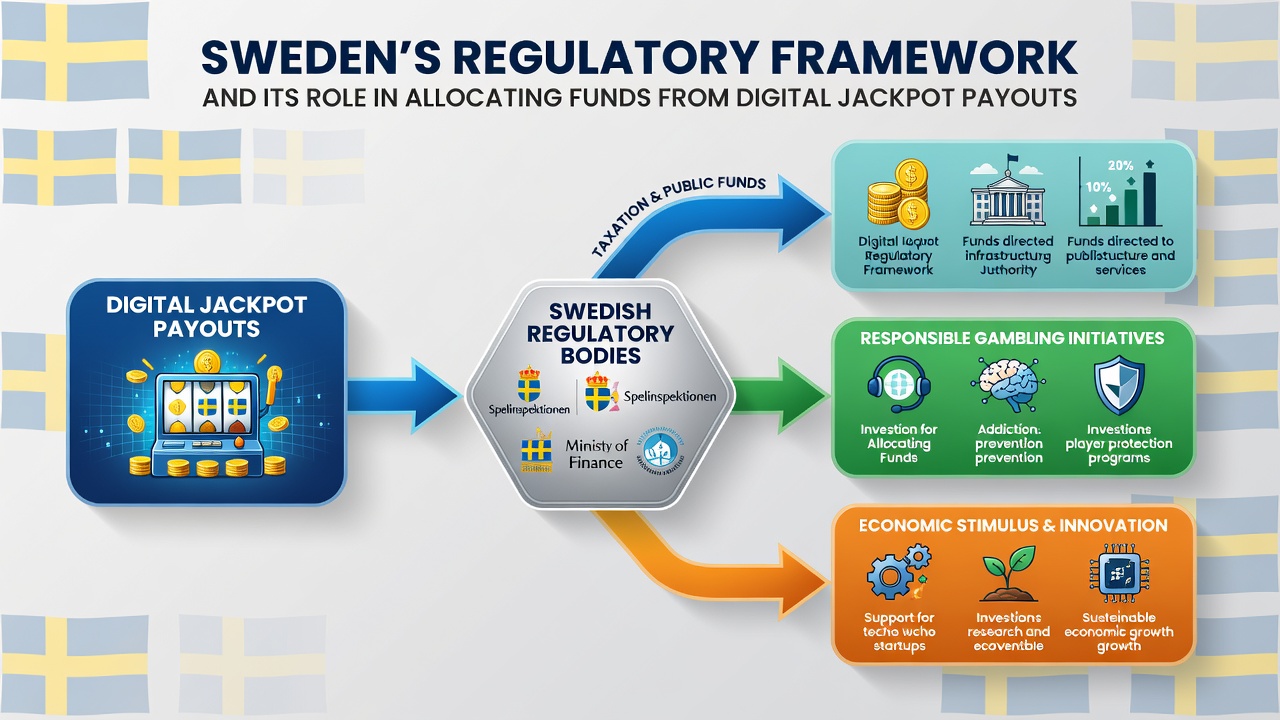
Sweden's Regulatory Framework and Its Role in Allocating Funds from Digital Jackpot Payouts
Sweden maintains a structured system for overseeing digital gambling activities, with particular attention to how revenues from online jackpot payouts flow through licensed channels into designated public and social programs. The framework centers on the Swedish Gambling Authority, known as Spelinspektionen, which issues licenses, monitors compliance, and directs portions of operator revenues toward state-defined objectives. Operators handling digital jackpots must report transaction volumes, prize distributions, and tax obligations in real time, allowing the authority to track funds from the moment a ticket is purchased until the allocation stage. Legislation enacted in 2019 established clear categories for revenue distribution, separating taxes paid by operators from mandatory contributions to sports organizations, cultural initiatives, and public health campaigns. Digital jackpot platforms fall under the same rules as traditional lotteries when they exceed certain prize thresholds, which triggers additional reporting requirements and ensures that a fixed percentage of gross gaming revenue reaches the designated funds. This approach creates a direct pipeline where each large payout cycle contributes measurable amounts to the national budget lines supporting youth sports and addiction prevention services. Data from Spelinspektionen shows that digital channels now account for the majority of jackpot-related activity, prompting the authority to refine its oversight tools in preparation for system updates scheduled for September 2026. Those changes will introduce enhanced digital reporting protocols that integrate with banking systems, reducing delays between payout events and subsequent fund transfers. Observers note that the upcoming adjustments build on existing requirements for operators to maintain separate accounts for jackpot reserves, ensuring that unclaimed prizes automatically redirect into the allocation pool rather than remaining with the company.Key Mechanisms for Revenue Collection and Distribution
The process begins when players purchase digital tickets or place bets on jackpot draws, at which point operators collect the stake and immediately segregate the regulatory share. Spelinspektionen mandates that a portion of every jackpot pool supports administrative costs while the remainder splits between winner payouts, operator margins, and statutory contributions. Tax authorities receive their allocation first, calculated on a sliding scale that increases with total revenue, after which the residual amount moves to the Swedish Gambling Fund for further disbursement.
Studies from the Nordic Council of Ministers indicate that this layered system has remained stable across multiple license renewal cycles, with digital jackpot operators demonstrating consistent compliance rates above 95 percent in annual audits. Funds reaching the Gambling Fund support projects ranging from community recreation centers to research on responsible gaming behaviors, creating measurable links between online play and local infrastructure improvements.
Allocation Priorities and Recent Adjustments
Priority areas include support for elite sports programs and grassroots clubs, cultural preservation grants, and treatment facilities for gambling-related issues. Each category receives a predetermined share based on annual parliamentary decisions, with digital jackpot revenues forming an increasingly visible component of the total pool. In practice, a single high-value online draw can generate several million kronor in contributions once taxes and operational costs are deducted, illustrating the scale at which these mechanisms operate.
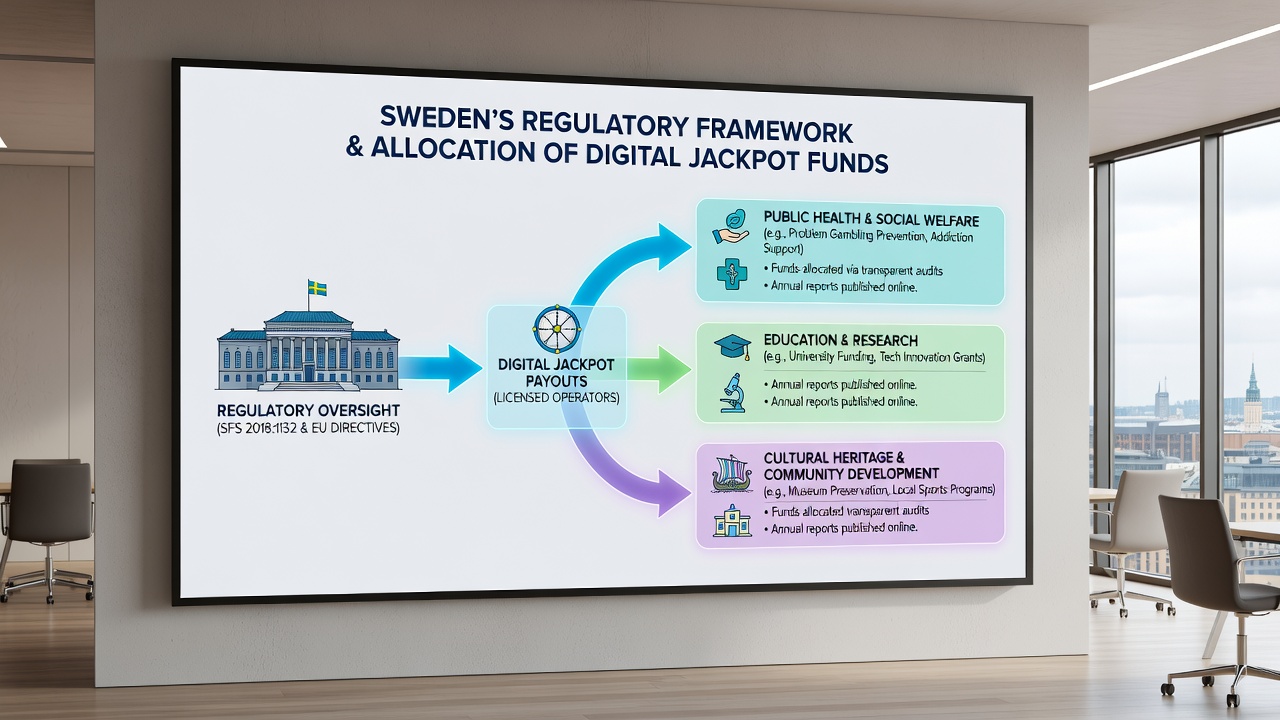
Researchers at Stockholm University have examined how these allocations compare with similar frameworks in other European jurisdictions, noting that Sweden's model emphasizes transparency through public dashboards updated quarterly. The dashboards display aggregate figures for jackpot contributions without revealing individual winner identities, balancing privacy requirements with public accountability. This level of disclosure helps maintain trust in the system while operators prepare for the technical upgrades expected in September 2026.
Compliance and Enforcement Practices
Enforcement relies on a combination of automated monitoring software and periodic on-site inspections. Licensed platforms must retain transaction records for at least five years, enabling Spelinspektionen to reconstruct any jackpot payout sequence and verify that the correct percentages reached the intended recipients. Penalties for non-compliance range from fines scaled to revenue size up to license revocation in cases of repeated or severe breaches.
Industry reports from the European Gaming and Betting Association highlight that Swedish operators have invested significantly in compliance infrastructure, including real-time APIs that feed directly into the authority's oversight platform. These investments reduce administrative friction and allow faster confirmation that funds have moved according to schedule, particularly when large digital jackpots trigger accelerated distribution timelines.
Conclusion
Sweden's regulatory approach ties digital jackpot activity to specific public outcomes through defined collection points and transparent distribution channels. The framework continues to evolve ahead of the September 2026 enhancements, which aim to further streamline reporting and allocation processes while preserving the core principle that a measurable share of online gaming revenue supports broader societal goals. Data collected by Spelinspektionen and independent academic sources continues to inform adjustments, ensuring the system remains aligned with both technological developments and parliamentary spending priorities.